



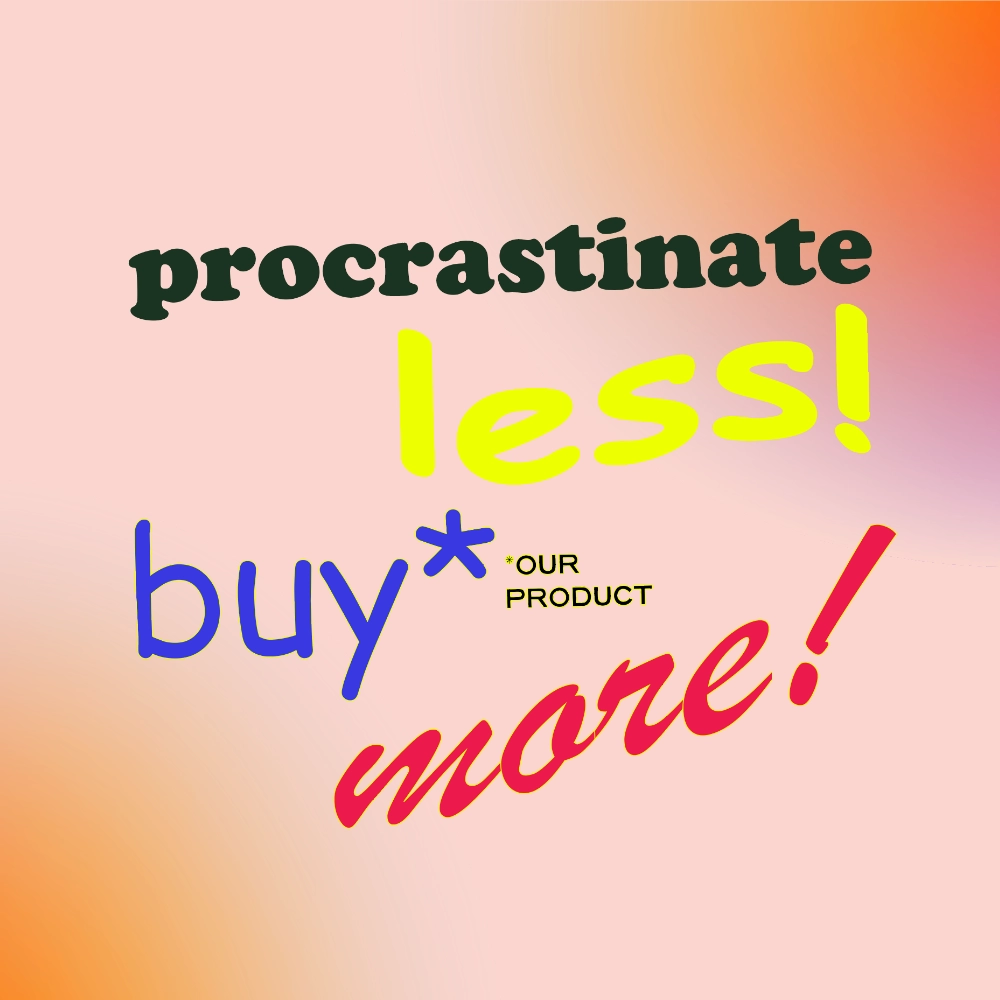
"X Less, Y More", or Your Brand's Laziest Motto
"[Verb] less, [verb] more" is the participation trophy of taglines. Costs nothing to write, and says nothing about your brand that a hundred other brands couldn't say word-for-word.
Stress less, live more. Worry less, cook more. Spend less, smile more.
X Less, Y more. Solve for Y.
Why is this formula so tempting?
Once you notice the formula you cannot stop noticing it, and once you can't stop noticing it, you start to see it for what it is: a fill-in-the-blanks template that lets a brand skip the actual work of saying who they are.
It's tempting because it feels like meaning. The structure does three things at once, and all three are cheap.
It borrows the cadence of wisdom. "Less X, more Y" has the rhythm of a proverb — less haste, more speed; less talk, more action. Your ear hears the shape and assumes the substance is there. It usually isn't.
It flatters the customer without committing to anything. "[good verb] more [bad verb] less" is a milquetoast promise. More than what? Measured how? Nobody ever returned a product because they didn't live more.
It's funadamentally a bad pickup line.
It all the work onto the reader and takes credit for the feeling the reader supplies.
Consider the following:
Here's a test - Swap your product for a competitor's. If the motto still works, it's not punchy enough.
Take a line like "pack less, adventure more" — the kind of thing you've seen on a slim wallet or a minimalist bag, and some very good brands have run some version of it.
A strong product with sharp design can wear a generic tagline just fine. But run the test anyway. Pack less, adventure more works just as well for a backpack, a travel concierge, a productivity app, a bespoke lunchbox company.
The line isn't wrong. It's just not ownable.
It's doing the least a tagline can do — and when the rest of the brand is that good, the line is the one place still leaving value on the table.